


FOR RESEARCH USE ONLY • NOT FOR HUMAN USE
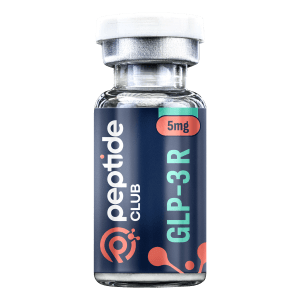
GLP-1 S (5mg)
Specifications
GLP-1 S is a long-acting GLP-1 receptor agonist studied in research for its role in pancreatic beta-cell signaling, glucagon suppression, and hypothalamic appetite regulation pathways.
-
Peptide: GLP-1 S
-
Purity: >99%
-
Form: Lyophilized powder
-
Quantity: 5mg per vial
-
Storage: Store at -20°C (-4°F). Refrigerate after reconstitution and use within 30 days.
-
Research Grade: Laboratory research use only
Important Notice
This material is supplied solely for scientific investigation.
It is not designed for human or animal consumption, medical use, or diagnostic application.
FOR RESEARCH USE ONLY. NOT FOR HUMAN CONSUMPTION.
$35.00
Certifcate of Analysis
Shipping Info
Free shipping policy with no hidden membership or hidden fees.
At Peptide Club, we deliver high-purity research compounds backed by controlled synthesis and strict quality verification, giving laboratories confidence in every batch for consistent and reliable scientific study.

Research Peptides
Produced through controlled synthesis for reliable laboratory use.
Laboratory Compounds
Formulated to support accuracy across a wide range of experiments.
Quality Verification
Each batch undergoes internal testing to confirm identity and consistency.
Third-Party Testing
Independent analytical validation adds an extra layer of assurance.
Purity Standards
Maintained to support reproducible and dependable research results.
Research-Focused Use
Intended strictly for scientific, analytical, and investigational applications.
What purity level are your peptides and how is it verified?
All peptides available through Peptide Club meet a minimum purity threshold of 99%+, which is among the highest standards in the compounded research peptide industry.
Every batch undergoes rigorous third-party laboratory testing before it reaches our clients. Our quality verification process includes:
Purity Analysis via HPLC — High-Performance Liquid Chromatography (HPLC) is used to confirm that each compound meets or exceeds the 99%+ purity specification by precisely separating and quantifying all components in the batch.
Mass Spectrometry (MS) Confirmation — Mass spec testing verifies the molecular identity and structural integrity of the peptide, confirming you’re receiving exactly what’s on the label.
Endotoxin Testing — Each batch is tested and confirmed endotoxin-free using LAL (Limulus Amebocyte Lysate) or equivalent testing methods, ensuring the highest level of safety for research use.
Sterility & Compounding Standards — All peptides are compounded in a certified U.S.-based facility operating under strict quality controls, with each batch traceable to its Certificate of Analysis (CoA).
Certificates of Analysis are available here: https://peptideclub.com/coa-page/
What is a Certificate of Analysis (CoA) and how do I read it?
A Certificate of Analysis (CoA) is an official document issued by an independent, accredited laboratory that confirms the identity, purity, and safety of a specific batch of peptide. Every batch we ship is backed by a CoA — it’s your proof that what’s in the vial matches exactly what’s on the label.
What You’ll Find on a Peptide CoA:
Product Identity — The peptide name, molecular formula, molecular weight, and batch/lot number. This confirms you have the correct compound and allows full traceability.
Purity Result (HPLC) — Expressed as a percentage (e.g., 99.4%). This is the most important figure. It tells you what portion of the compound is your target peptide versus trace impurities. Our peptides are guaranteed at 99%+.
Molecular Weight Confirmation (Mass Spec) — Listed in Daltons (Da). This verifies the peptide’s structural integrity and that no degradation or contamination has altered the compound.
Endotoxin Level — Measured in EU/mg (Endotoxin Units per milligram). A passing result confirms the batch is safe from bacterial contamination byproducts that could interfere with research outcomes.
Appearance — Typically noted as a white to off-white lyophilized (freeze-dried) powder. A visual confirmation of expected physical form.
How to Read the Purity Result:
The HPLC purity percentage is your headline number. Anything at or above 99.0% meets our quality threshold. Some COAs will also show a chromatogram — a graph with peaks representing different compounds detected. A clean result shows one dominant peak (your peptide) with minimal secondary peaks (impurities).
Certificates of Analysis are available here: https://peptideclub.com/coa-page/
What is bacteriostatic water?
Bacteriostatic water (BW) is sterile water for injection that contains 0.9% benzyl alcohol as a preservative. The benzyl alcohol inhibits the growth of bacteria, which is what makes it “bacteriostatic” — it doesn’t kill bacteria outright, but prevents them from multiplying in the solution.
Why It Matters for Peptide Research:
Lyophilized (freeze-dried) peptides must be reconstituted with a liquid before use. Bacteriostatic water is the standard choice for this because it allows a single vial to be accessed multiple times over an extended period without risking contamination — unlike plain sterile water, which should ideally be used in a single session.
Bacteriostatic Water vs. Sterile Water — What’s the Difference?
Bacteriostatic Water — Contains 0.9% benzyl alcohol. Suitable for multi-use vials. Keeps reconstituted peptides stable and protected from bacterial growth for up to 28 days when stored properly (refrigerated at 2–8°C / 36–46°F).
Sterile Water for Injection — Contains no preservative. Single-use only. Once a vial is opened and a peptide is reconstituted, it should be used promptly.
For research applications involving repeated draws from the same vial, bacteriostatic water is the appropriate choice in nearly all cases.
Storage After Reconstitution:
Once a peptide is reconstituted with bacteriostatic water, it should be stored in the refrigerator (2–8°C), kept away from light, used within 28 days, and never frozen after reconstitution.
Where to Source It:
Bacteriostatic water is available through Peptide Club alongside our peptide catalog, ensuring you have everything needed for your research in one place.
How should I store peptides?
Proper storage is one of the most important factors in maintaining peptide integrity and ensuring reliable research results. Peptides are sensitive compounds — exposure to heat, light, moisture, and repeated freeze-thaw cycles can degrade them over time. Following these guidelines will protect your investment and keep your peptides stable for as long as possible.
Lyophilized (Freeze-Dried) Peptides — Before Reconstitution:
Lyophilized peptides are the most stable form and have the longest shelf life when stored correctly. Keep them in the freezer at -20°C (-4°F) for long-term storage. If you plan to use a peptide within a few weeks, refrigeration at 2–8°C (36–46°F) is acceptable. Always store vials away from light, ideally in their original packaging or a dark container. Keep vials sealed and dry — moisture is one of the primary causes of peptide degradation.
Reconstituted Peptides — After Adding Bacteriostatic Water:
Once a peptide has been reconstituted, it is significantly more sensitive and must be handled accordingly. Store reconstituted vials in the refrigerator at 2–8°C (36–46°F). Use within 28 days of reconstitution. Never freeze a reconstituted peptide — this damages the structure of the compound and reduces its effectiveness. Keep vials upright, away from light, and tightly capped between uses.
General Best Practices:
Only reconstitute what you need. If you have multiple vials, keep extras lyophilized and frozen until needed. Allow frozen vials to come to room temperature naturally before opening — do not use heat. Minimize the number of times you open or handle vials to reduce contamination risk. Label vials with the reconstitution date so you can track the 28-day window accurately.
How long do peptides remain stable?
Peptide stability depends on several factors: whether the peptide has been reconstituted, how it is stored, and the specific compound in question. As a general rule, lyophilized peptides stored correctly are highly stable, while reconstituted peptides have a much shorter usable window.
Lyophilized (Freeze-Dried) Peptides:
When stored in the freezer at -20°C and kept away from moisture and light, most lyophilized peptides remain stable for 24 months or longer. Refrigerated storage at 2–8°C is suitable for shorter-term use, typically within 3–6 months. The lyophilization process is specifically designed to extend shelf life by removing water — the primary driver of peptide degradation — which is why all Peptide Club compounds are shipped in this form.
Reconstituted Peptides:
Once mixed with bacteriostatic water, the stability window shortens considerably. Reconstituted peptides stored in the refrigerator at 2–8°C should be used within 180 days. After this window, potency and integrity cannot be guaranteed. Freezing a reconstituted peptide is not recommended, as the freeze-thaw process disrupts the peptide structure and accelerates degradation.
Factors That Shorten Stability:
Heat — Elevated temperatures accelerate the breakdown of peptide bonds. Keep peptides away from warm environments and never leave vials at room temperature for extended periods.
Light — UV exposure degrades peptides over time. Store vials in dark conditions or in opaque containers.
Moisture — Even small amounts of humidity can compromise a lyophilized peptide. Keep vials sealed until ready to use.
Repeated freeze-thaw cycles — Each cycle stresses the compound. If long-term storage is needed, consider dividing a batch into smaller aliquots so only what is needed is thawed at a time.
A Note on Peptide-Specific Variation:
Some peptides are inherently more stable than others due to differences in their amino acid sequences and structural properties. If you have questions about the expected stability of a specific compound in your order, our team at info@peptideclub.com can provide guidance based on the individual peptide.
How fast do you ship and is cold shipping required?
Shipping Speed:
All orders are processed and shipped within 1–2 business days of confirmation. All orders of $75 or more are automatically shipped via UPS 2-Day service at no additional cost, ensuring fast and reliable delivery. For orders below $75, standard shipping is available with typical transit times of 3–5 business days depending on your location. Expedited shipping upgrades are available at checkout for any order.
Is Cold Shipping Required?
No. All Peptide Club peptides are shipped in lyophilized (freeze-dried) form, which means they do not require cold packing or refrigerated shipping under normal transit conditions. Lyophilized peptides are stable at ambient temperatures for the duration of standard domestic shipping windows without any meaningful loss of potency or integrity.
This is one of the key advantages of lyophilization — it allows for safe, reliable shipping without the added cost or complexity of cold chain logistics.
What to Do When Your Order Arrives:
Once your package is received, transfer your peptides to proper cold storage promptly. Lyophilized vials should go into the refrigerator for short-term use or the freezer at -20°C for long-term storage. Do not leave vials sitting at room temperature for extended periods after delivery.
International Shipping:
At this time, Peptide Club ships within the United States only. If you have questions about your specific location or a special circumstance, reach out to our team directly at peptideclub.com.
Do you ship internationally?
At this time, Peptide Club does not ship internationally. We currently serve customers within the United States only.
If you have any questions or believe your situation warrants further discussion, feel free to reach out to our team directly at info@peptideclub.com.

Kaleb –
everything was accurate and timely.
Bethany Diaz –
Product handled with care.
MICHAEL –
Fast delivery very happy with my selection,
richard v –
Quality product
Huel –
easy transaction, super fast delivery
Ash –
5 star top seller!!
faith –
Quick & easy
derick –
excellent glp
Louis –
pure, this is my 2nd time buying